
Fused
Overview
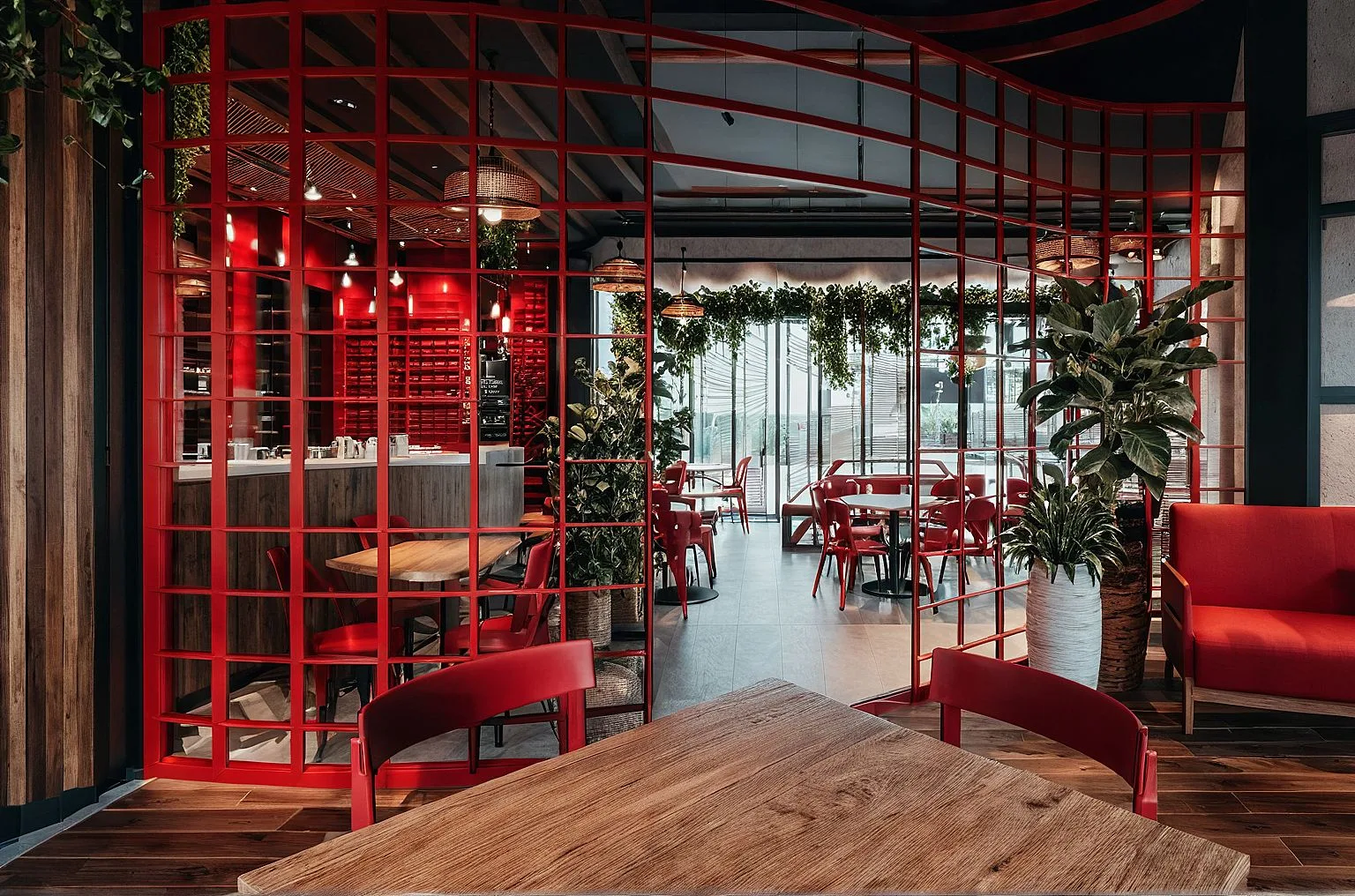
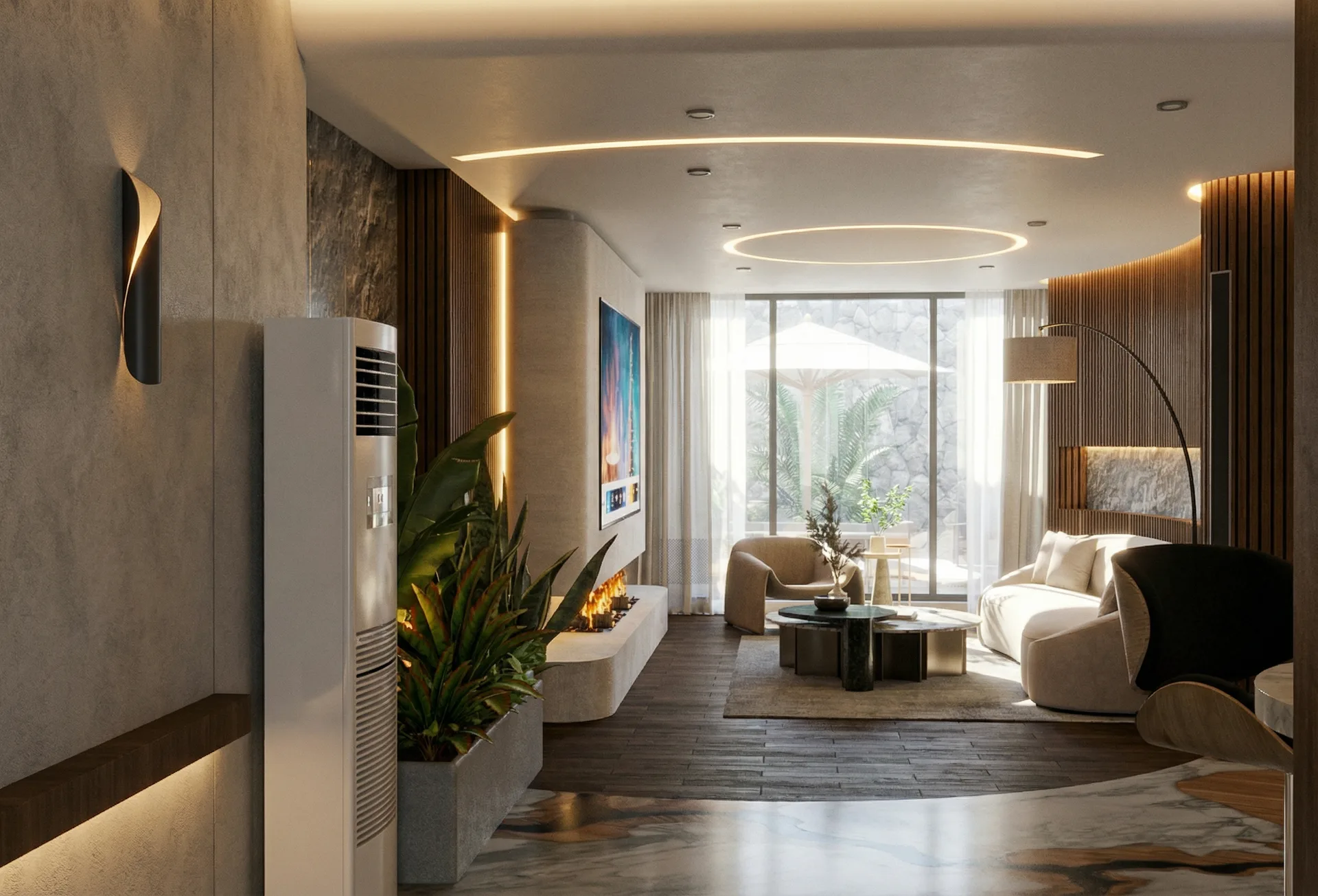
Fused is a Chinese restaurant built around a distinctly Pakistani interpretation of Chinese cuisine, bringing together familiar local flavours and an established culinary tradition. The interior design followed a similar philosophy, exploring the intersection of Chinese and Pakistani cultural influences through materiality, colour and carefully selected design elements.
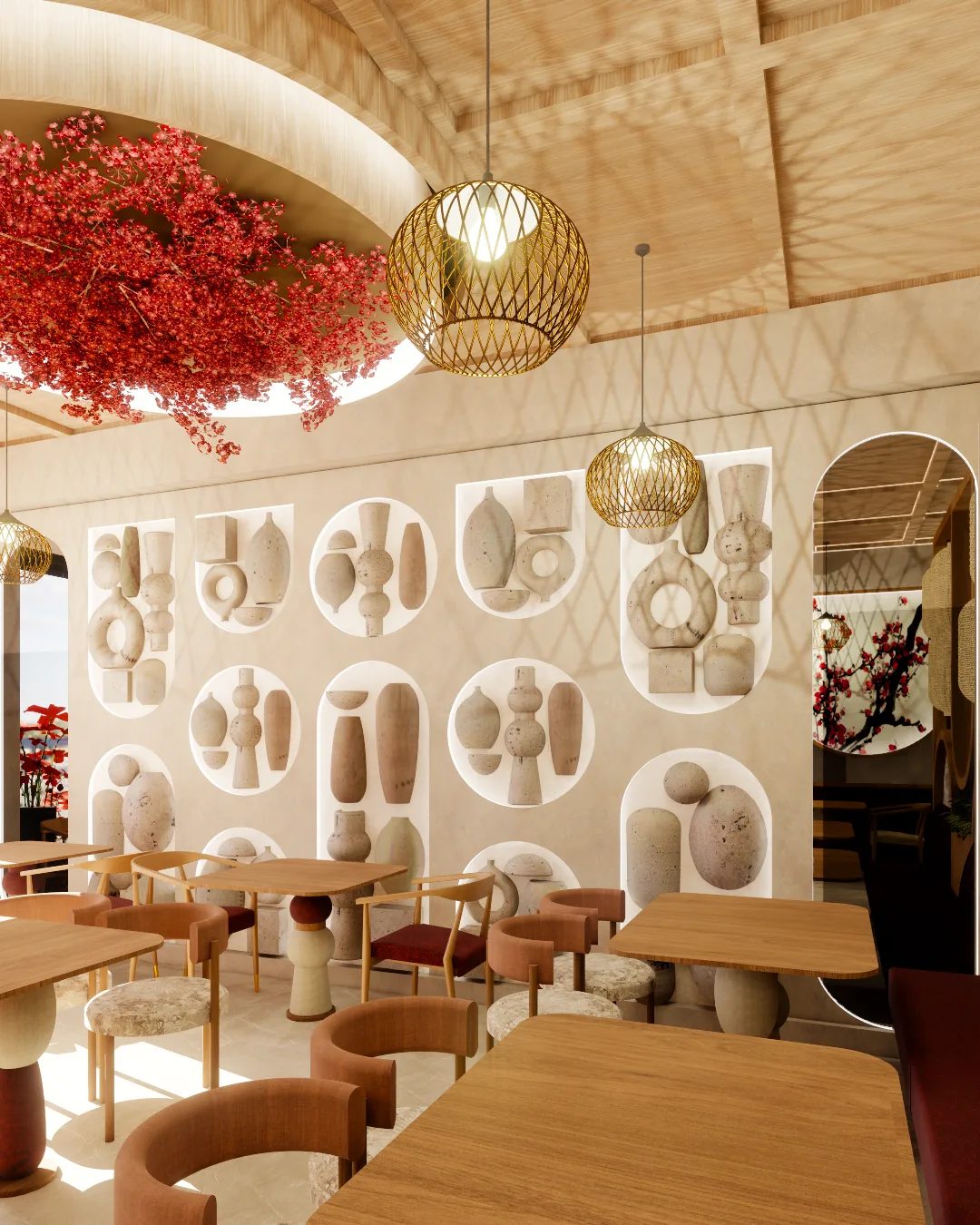
Rather than relying on literal cultural references, the design translated these influences into a contemporary interior language. One of the most prominent features was a large installation of traditional pottery, incorporated directly into a feature wall. Instead of treating pottery merely as a decorative object or functional product, it was reinterpreted as an architectural material and an art installation, giving local craftsmanship a central place within the space.
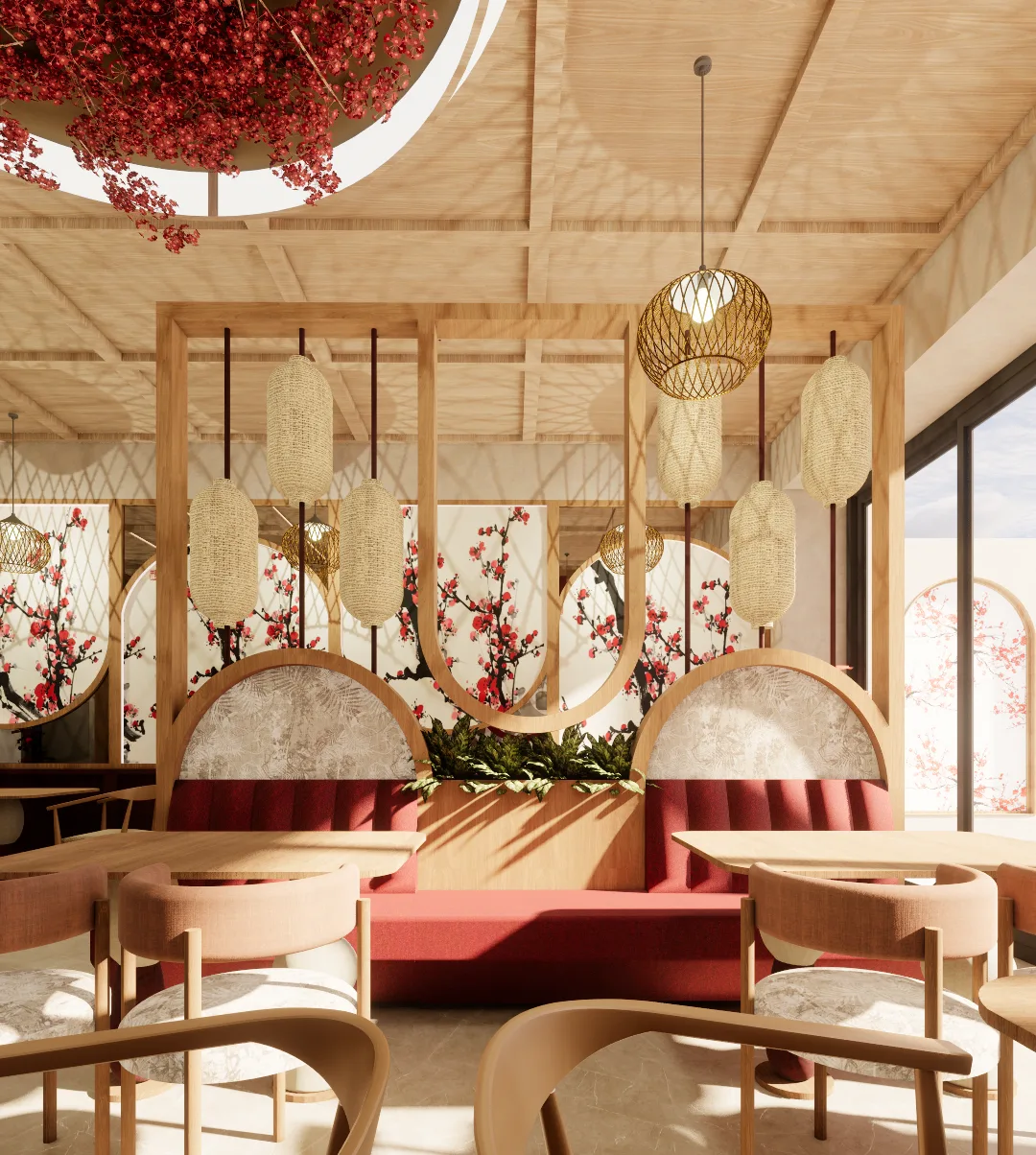
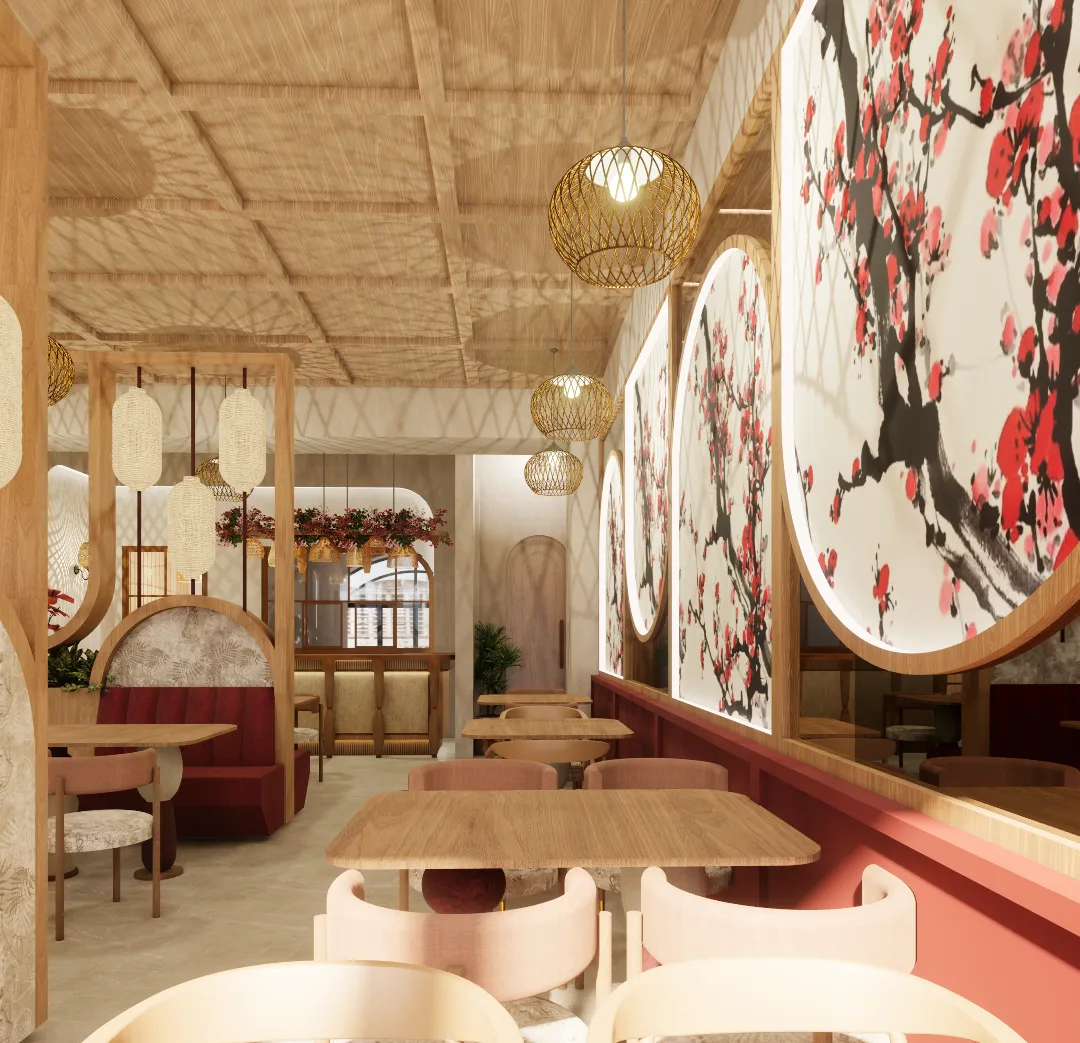
Terracotta flooring further reinforced the connection to traditional materials, while subtle references to Chinese culture were introduced through the inclusion of cherry blossom trees. These were incorporated in a restrained manner, adding character without overwhelming the overall design.
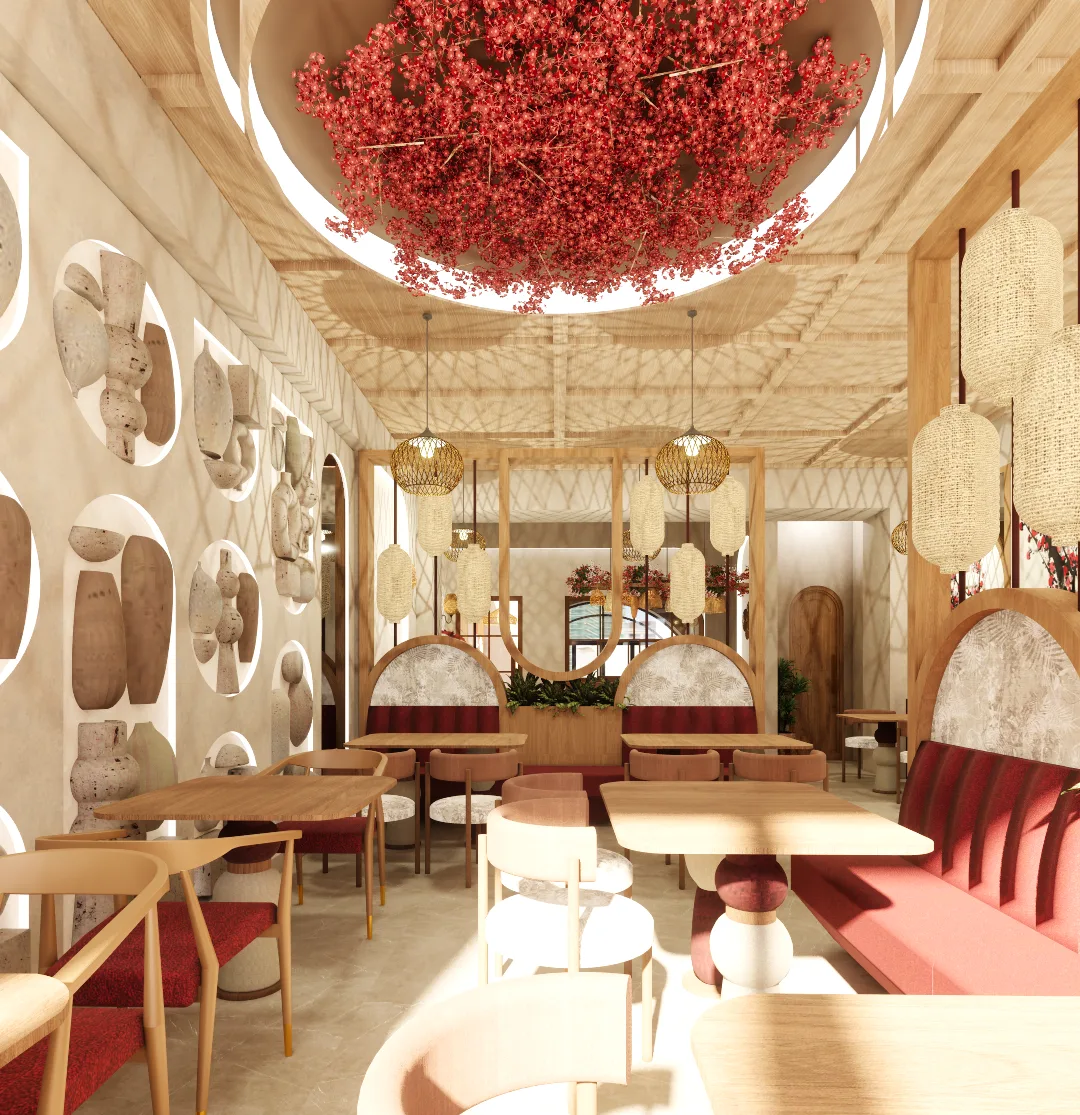
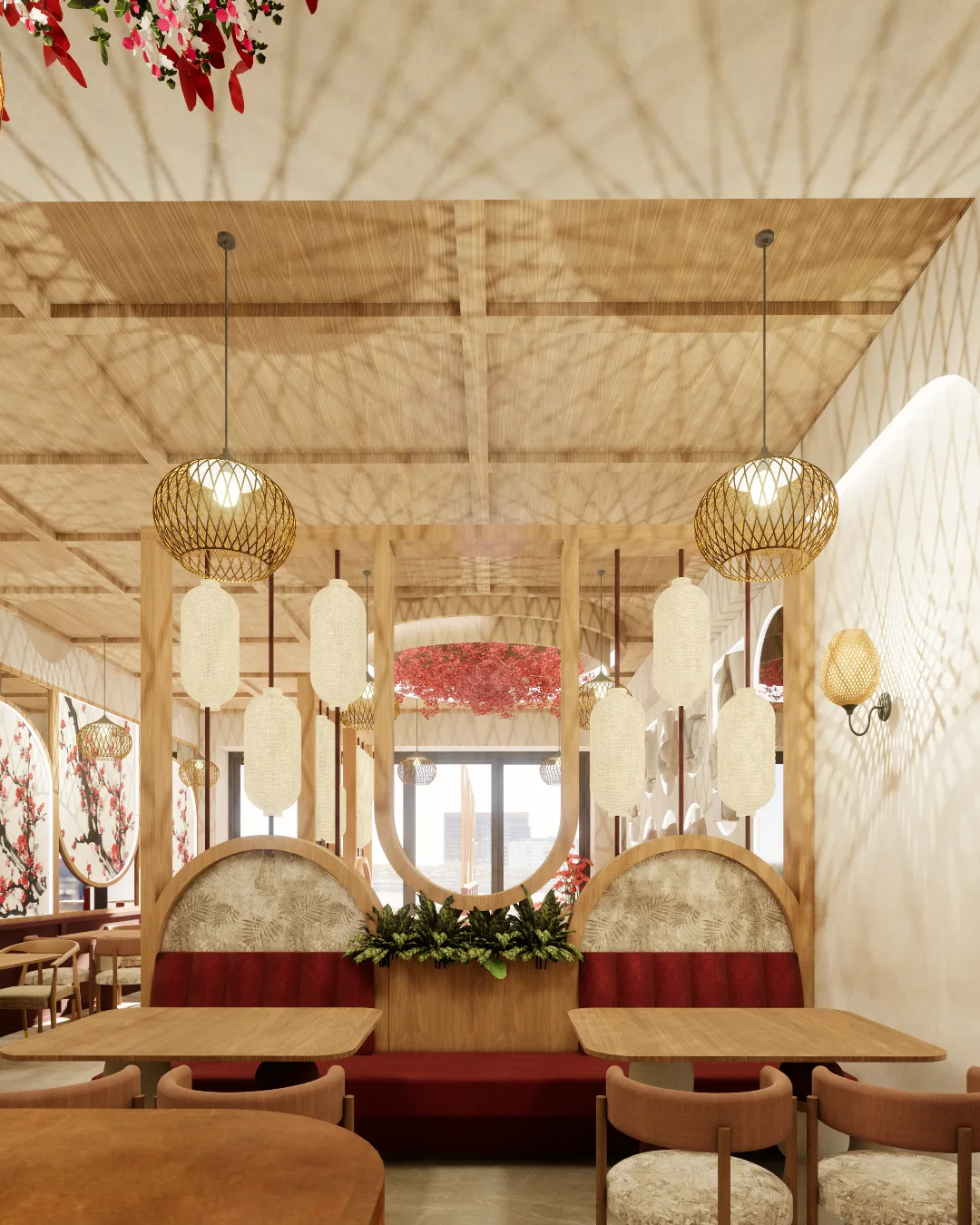
The material and colour palette brought together light-toned wooden furniture, terracotta, cherry blossom-inspired reddish pink accents, and softer limewash and eggshell white finishes. The predominantly natural and neutral tones allowed the individual cultural elements to complement one another while maintaining a calm, contemporary atmosphere.
Spatial Planning & Lighting
Working within a relatively compact footprint, the planning focused on accommodating a generous number of dining seats without making the restaurant feel crowded. Furniture selection, seating arrangements and the treatment of an internal dividing wall were carefully considered to maintain comfortable movement and preserve a sense of openness between different areas.
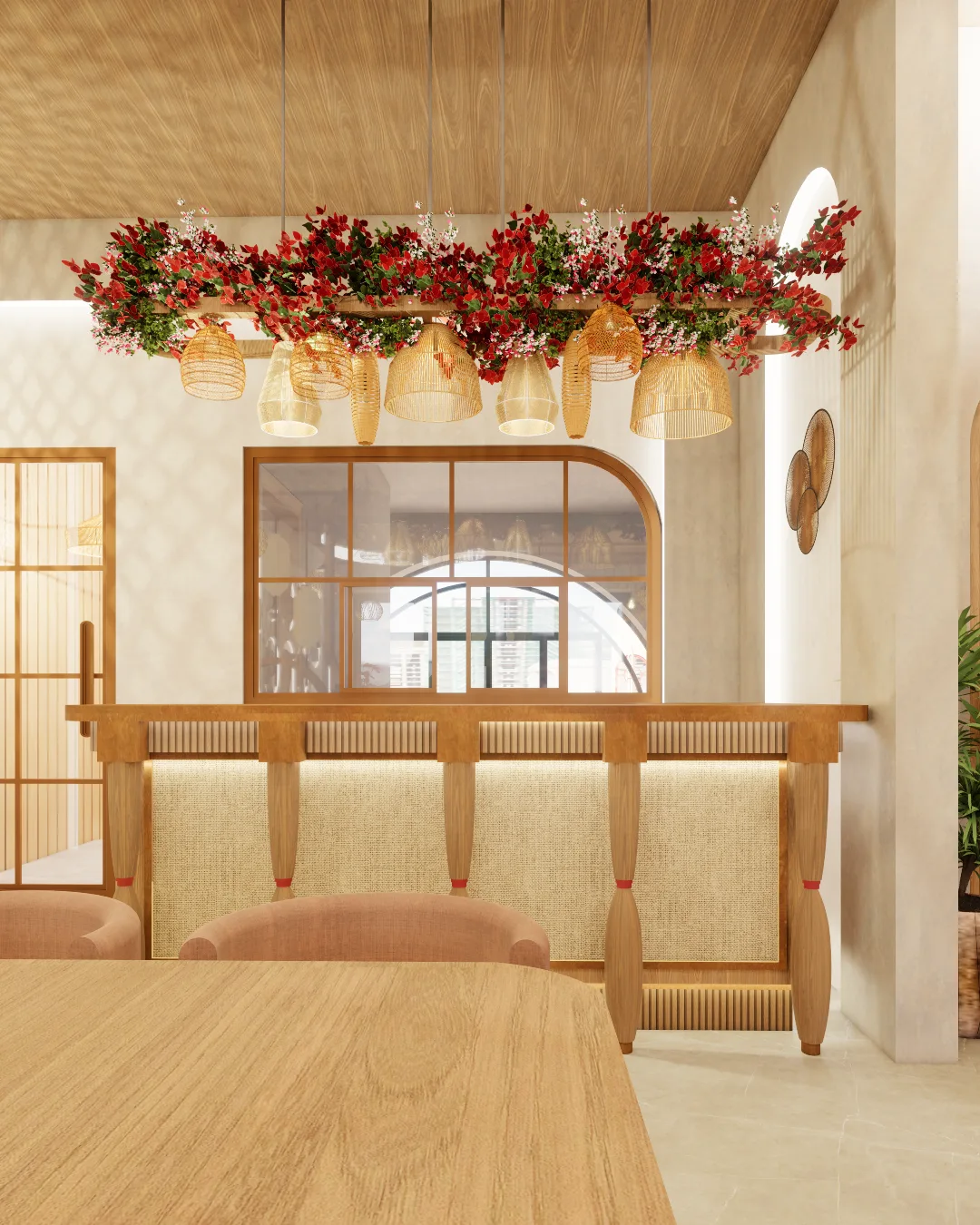
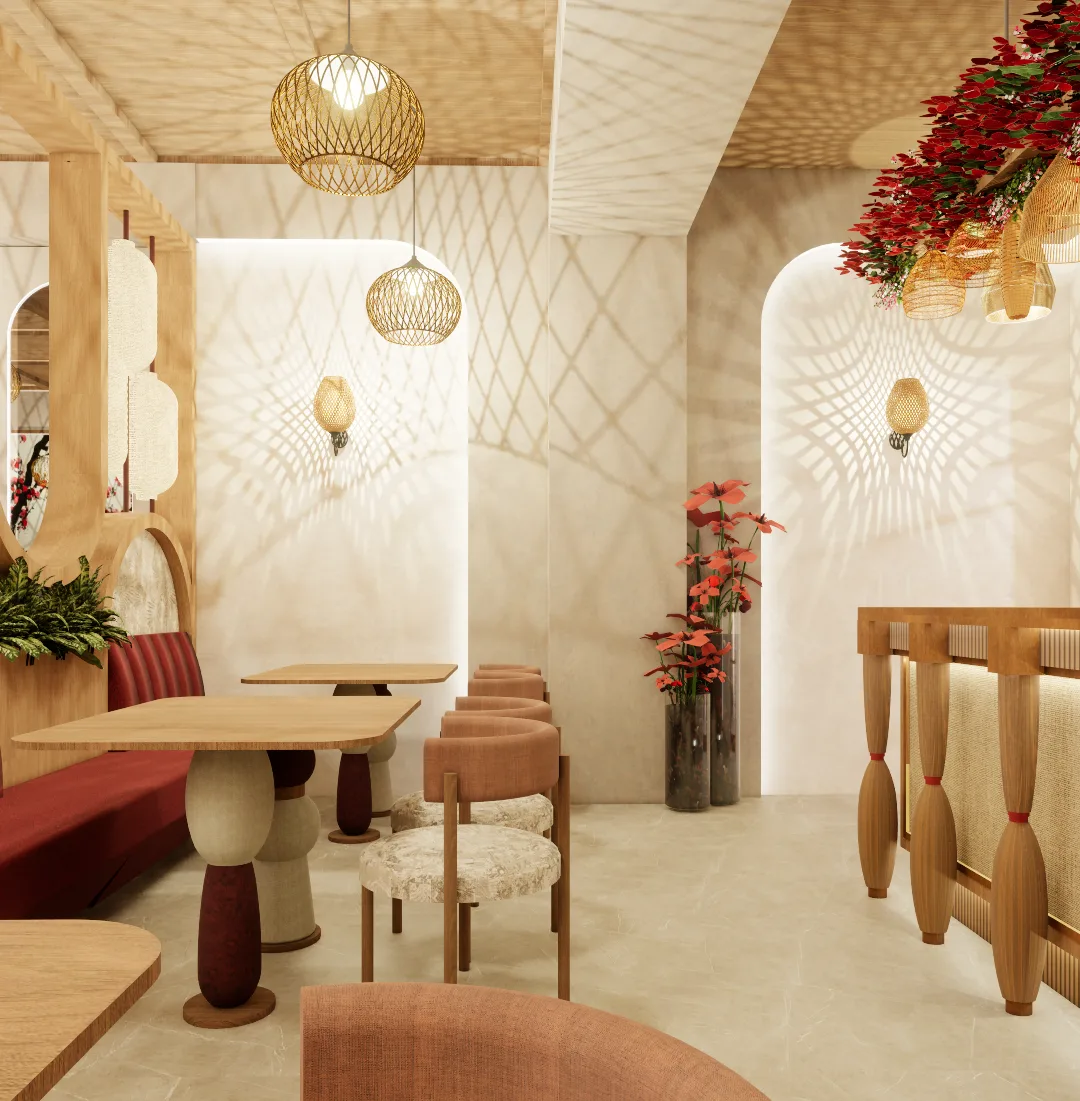
Natural light was another important consideration. With only one window providing daylight, the layout was developed to maximise its reach throughout the dining space, ensuring that the interior remained bright and welcoming rather than feeling enclosed or gloomy.
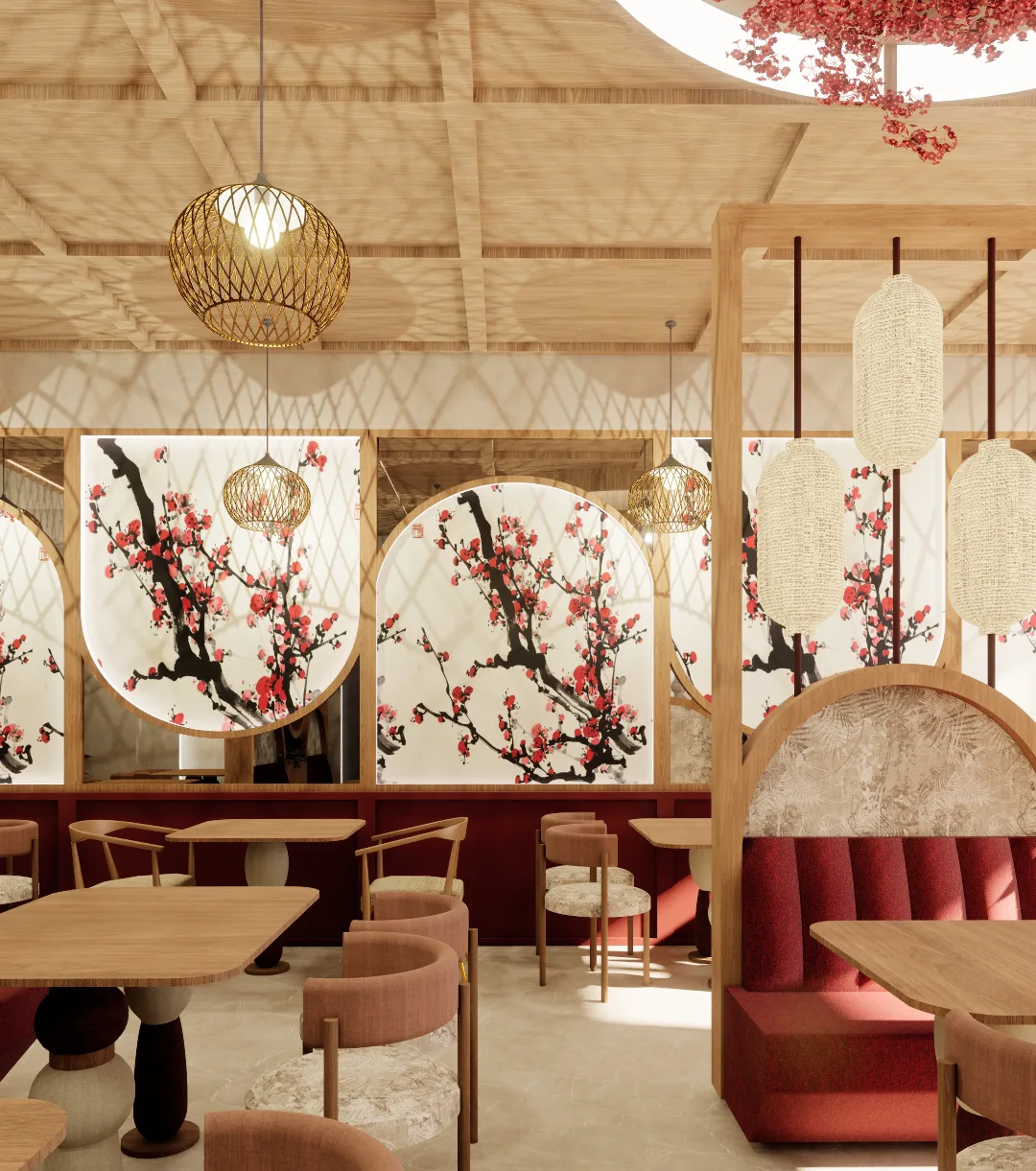
The resulting interior brings together cultural references, traditional craftsmanship and contemporary spatial planning to create a dining environment that reflects the restaurant's culinary identity while maintaining its own distinctive character.